Finance
Specially in today’s world we have seen fundamental transformations in Finance – from bitcoins and crypto to distributed ledgers, Cloud payment apps and banks dismantling their brick-and-mortar branches – digitalization: a new era.
A world that has changed already, and with needs for unprecedented delivery of accuracy and precision.
Banking Software
Designing and implementing core banking systems, integration layers, and transaction processing platforms with a focus on concurrency and parallelism, performance, dynamic security and regulatory compliance. Experience spans 360 degrees from SWIFT MX to payments, accounting engines, wealth management modules and large-scale financial data flows.
Tools
Apart from expertise in large systems, such as Transaction (Transact, T24 or Globus – experience spanning multiple generations back), I primarily working with C#, .NET and SQL Server, microservices and distributed architectures, complemented by deep experience in system integration, data validation, performance optimization, and operational resilience in production environments.
About me
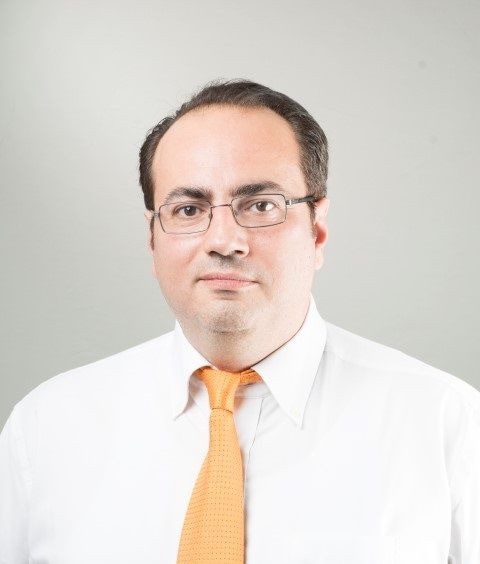
Several decades working in banking and the financial sector, my best asset is a combination of experience, banking knowledge and programming mainly in C# and .NET.
Being a (ex) stock broker, FX dealer, Treasurer and then Programmer, Systems implementer, Senior Business Analyst, Project Manager and finally Technical Lead, my super power is Common Sense.
Working as systems analyst, banking consultant and later as an Software Tech Lead for the largest financial institutions in Europe and Asia, after all those systems and machines, I found out that logic solves all of the problems, if it’s paired by skills, knowledge, and a persistent will for excellence.
A few things I’m great at
Designing effective true solutions, adjusting for your cost in man-hours and your budget, is, first of all, a matter of strategy. Synergy and ergodic design meet your strategic plans.
Tractability is included.

Software Engineering
Designing and implementing robust software primarily in C#, .NET, and SQL Server, with an emphasis on correctness, clarity, and long-term maintainability. From core services to data-intensive components, I focus on clean abstractions, and systems that remain effective under real operational pressure.

Banking Systems Design
Architecting banking and financial systems where accuracy, traceability, and regulatory constraints are first-class concerns. Experience spans transaction processing, accounting logic, integrations, and messaging layers, with design decisions guided by domain knowledge rather than technology trends.

Performance
Building systems that perform predictably under load by design, not by accident. This includes mastery in data modeling, efficient concurrency, parallelism and an understanding of where latency, contention, and resource exhaustion is actually found in critical production environments under sustained load.
Dynamic Design
Applying C# and .NET to build observable, concurrent systems that remain reliable under load.
I use C# as a systems language for building components that remain correct under concurrency, failure, and operational pressure. Abstractions are explicit and intentional: strongly-typed domain models, immutable data where it matters, constrained state transitions, and boundaries that prevent accidental coupling. Asynchronous flows, parallel pipelines, and message-driven components are designed so that correctness is preserved independently of execution order, thread scheduling, or scale.
Observability is engineered into the system. Logging is structured, contextual, and low-overhead, designed to survive high throughput and parallel execution. Instrumentation is applied at method and instruction level when required—using IL weaving techniques (e.g. Fody-based aspects) to capture parameters, decisions, intermediate results, and failure semantics without polluting business logic. This enables audit-grade diagnostics, deterministic replay, and post-mortem analysis even in highly concurrent or distributed environments.
Security, persistence, and performance are treated as a single design space. I work with certificate-based identity, signing, and trust chains, integrating application security with SQL Server (on-prem or Azure) using least-privilege access, controlled key material, and explicit failure paths. From an engineering standpoint, performance is achieved architecturally: bounded queues or ring buffers, backpressure, careful lock-free or lock-minimal concurrency, predictable shutdown semantics, and data access patterns that respect contention, latency, and memory behavior. The result is systems that perform predictably under sustained load, remain debuggable in production, and can evolve without losing control.
Metrics, Testing & documentation
Collaboration grounded in traceability, controlled change, and reproducible testing.
I work in structured, collaborative environments where traceability and shared understanding matter. This includes disciplined requirements and test management (e.g. HP ALM), issue tracking and delivery workflows in Jira, and living documentation in Confluence. The emphasis is on clear ownership, reproducible testing, and communication that supports complex systems over time rather than short-lived project milestones.
CI/CD Services
Controlled delivery from source to production.
Pipeline Design
Designing CI/CD pipelines that reflect system architecture, not tooling fashion.
Pipelines enforce build integrity, dependency isolation, and deterministic promotion across environments.
Automated Testing
Embedding unit, integration, and regression testing directly into the delivery flow.
Test execution is traceable, repeatable, and aligned with business-critical paths rather than synthetic coverage metrics.
Release Management
Controlled versioning, packaging, and promotion across all environments.
Releases are predictable, reversible, and auditable, with explicit rollback and shutdown semantics.
Infrastructure Integration
CI/CD integrated with target infrastructure rather than abstracted away from it.
Builds and deployments respect operating system, runtime, database, and network constraints found in real production systems.
Security & Compliance
Security controls embedded in the pipeline, not added after delivery.
This includes certificate handling, secrets management, signing, and verifiable provenance of deployed artifacts.
Observability & Feedback
Delivery pipelines instrumented to provide feedback, not just success or failure.
Build results, test outcomes, and deployment signals feed back into engineering decisions and system evolution.
The Engine
A production-proven stack shaped by financial systems, scale, and operational reality.
The technical stack spans Unix and enterprise Linux environments (AIX, RHEL, Linux), Windows Server, and common web server platforms, with hands-on administration experience in production systems. Core development is centered on C# and .NET, supported by experience in C, Java, Rust, Python, and R, applied where appropriate to system components, tooling, and analytics. Database expertise is anchored in Microsoft SQL Server, complemented by Oracle, DB2, MySQL, PostgreSQL, and MongoDB, including complex data modeling and traversal patterns. Banking and financial systems experience includes Temenos T24 across multiple modules, integration platforms such as IBM WebSphere and WTX, and interfaces to market and risk systems including Bloomberg (AIM, TOMS, MBTF/BTFE), Kondor+, Murex, Fincad, Quantifi, and SummixOne. The toolchain further includes MATLAB, Enterprise Architect (Sparx), Oxygen XML for XSD/XPath/XBRL work, and cloud platforms such as AWS and Azure, with a focus on system integration, data validation, and production-grade reliability.
Explore My Blog
Contact me
Happy to hear from you! Messages are reviewed personally and answered on a best-effort basis.
Your data will be used only to respond to your message and will not be stored. No marketing, tracking or automated processing is involved.
Please note that any response to a message submitted through this form does not constitute acknowledgment of the sender’s identity, authority, or legal status. Communications are treated as informational unless formally verified through appropriate channels.